

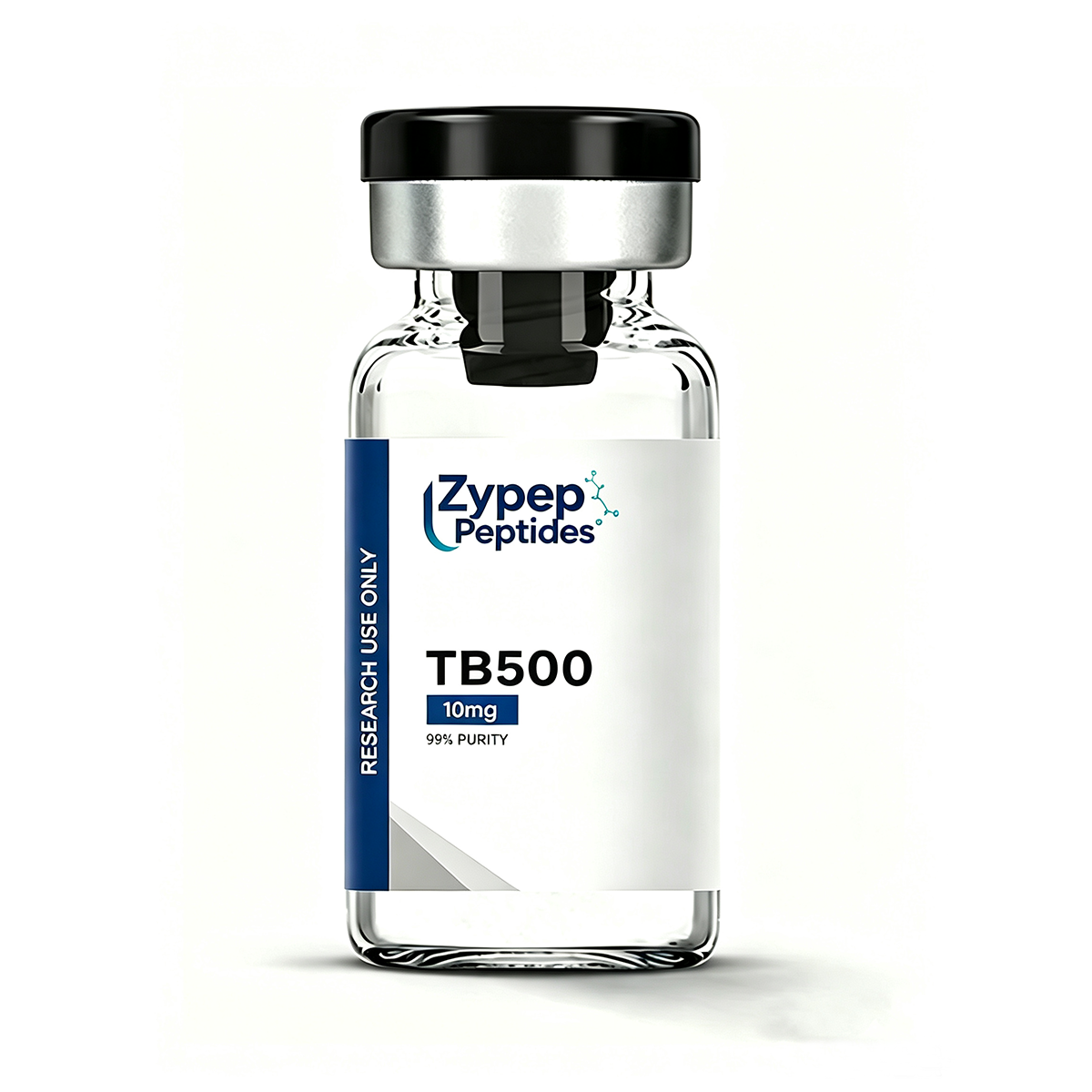
TB500 corresponds to residues 17–23 of the full 43-amino-acid Thymosin Beta-4 parent peptide, the biologically active core fragment responsible for actin-binding and migratory cell signaling activity:
- Short 17-residue linear sequence delivers selective G-actin sequestration function, inhibiting uncontrolled actin polymerization and enabling directional fibroblast, myoblast and endothelial cell migration toward injury microenvironments.
- Unmodified linear peptide structure without lipid conjugation, maintaining native intracellular peptide solubility in aqueous physiological buffers.
- Terminal amidation improves serum stability, extending measurable biological activity in systemic rodent preclinical models.
- Distinct complementary mechanism to BPC-157: TB500 governs cellular mobility and cytoskeletal repair, while BPC-157 drives angiogenesis and vascular basement membrane formation, explaining their ubiquitous co-use in combined trauma repair research.
| Property | Value |
|---|---|
| Full Name | TB500, Thymosin Beta-4 Fragment 17–23 |
| CAS Registry Number | 77591-33-2 |
| Molecular formula | C64H111N19O14S |
| Molecular weight | 1440.7 g/mol |
| Peptide length | 17 amino acid fragment |
| Compound class | Synthetic thymosin-derived cytoskeletal regenerative peptide |
| Primary molecular targets | G-actin monomer sequestration, NF-κB inflammatory pathway, MAPK migration signaling |
| Physical form | White crystalline lyophilised powder |
| Solubility | Sterile bacteriostatic water, neutral PBS pH7.0–7.5 |
| Purity standard | ≥99% HPLC confirmed per batch COA |
| Standard vial stock sizes | BT5 (5mg), BT10 (10mg) |
TB500’s tissue regeneration properties are documented across hundreds of peer-reviewed preclinical studies covering musculoskeletal trauma, cutaneous wound healing, cardiac post-ischemic repair and central nervous system microglial migration models. The peptide’s core actin-regulating function creates a unique research tool for studying cytoskeletal remodeling in both healthy and damaged tissue phenotypes.
Original Thymosin Beta-4 and TB500 fragment research established the peptide’s central role as the primary intracellular actin buffering protein in mammalian cells. Follow-up injury model publications validated dose-dependent acceleration of fibroblast migration, reduced local pro-inflammatory TNF-α/IL-6 cytokine levels and improved collagen extracellular matrix deposition in tendon, muscle and skin wound sites.
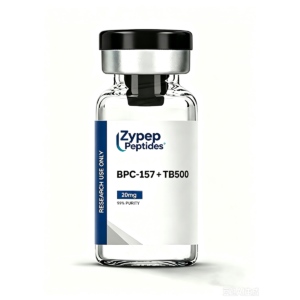
TB500 and BPC-157 represent the most popular combinatorial regenerative peptide stack for trauma research, with complementary non-overlapping repair pathways. Zypep Peptides offers standalone BT10 vials as well as pre-blended BB-series BPC157+TB500 compound vials to eliminate manual mixing for standardized comparative lab experiments.
Zypep Peptides supplies bulk factory TB500 lyophilized powder for tissue engineering labs, orthopedic preclinical CROs and global peptide wholesale distributors. Request bulk pricing, full batch COA and refrigerated shipping terms via the website online chat dialog on zypep.com. All BT-series products marked FOR LABORATORY RESEARCH USE ONLY, not intended for human therapeutic administration.
Reviews
There are no reviews yet.